From offices to museum: a short history
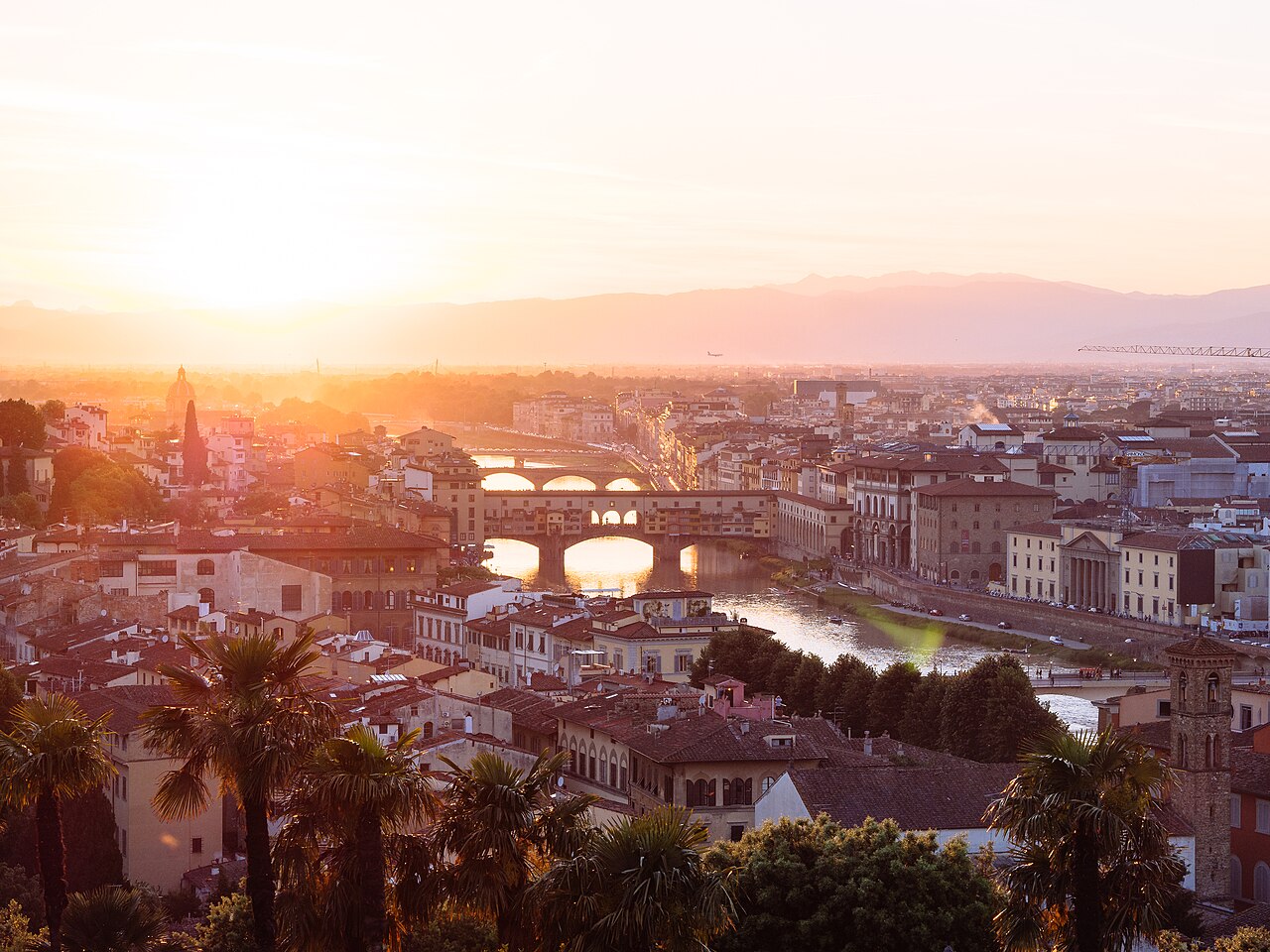
Unlike most great museums, the Uffizi was never built to be one. The building was commissioned around 1560 by Duke Cosimo I de' Medici and designed by Giorgio Vasari — it was meant to house the magistracies of the Florentine state, the “uffizi” (offices) that gave the palace its name.
The Medici collection
The Medici family ruled Florence for generations and collected without restraint. Cosimo the Elder and his grandson Lorenzo il Magnifico bought and commissioned paintings, sculpture, manuscripts and gems. Over the following century the family gathered the works that are still the heart of the collection today — Botticelli's mythologies among them.
Vasari's building quickly took on a second role: a private gallery. The tribuna room, built in the 1580s to display the family's jewels and rarest pieces, was already a tourist attraction in its own right — wealthy travellers were shown around on request. By the eighteenth century a visit had become an almost mandatory stop on the “Grand Tour” through Italy.
The last Medici and the museum's birth
In 1737 the dynasty ended when the last Medici ruler died without an heir. Rather than let the collection scatter, the family arranged — through the “Patto di Famiglia” — that the artworks would stay in Florence and belong to the city for public benefit. The Uffizi opened as one of Europe's first public museums, decades before similar collections were accessible anywhere else.
The museum today
Today the Uffizi Galleries (Gallerie degli Uffizi) group the Uffizi itself with related sites such as the Vasari Corridor over the Ponte Vecchio and the Pitti Palace. The collection spans antiquities, early Renaissance altarpieces and Baroque masters. The galleries remain among the most visited museums in the world, and the building along the Arno — reopened, renovated and extended several times — is as much a reason to come as the paintings.